Why Deflation is Bad for the Economy

Why Deflation is Bad for the Economy

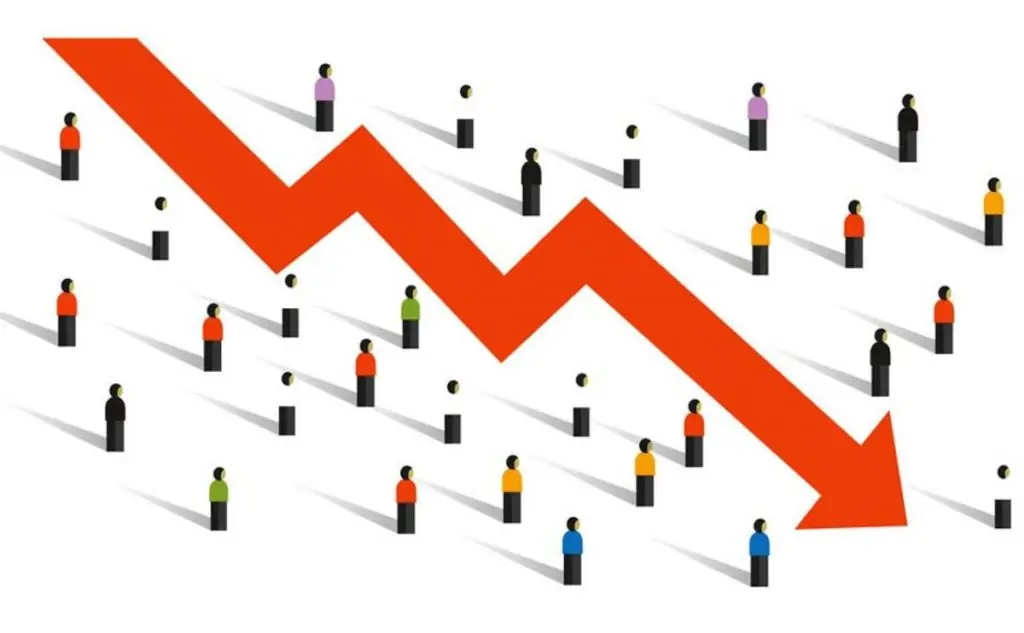
Deflation is caused by a decrease in demand for goods and services or an increase in supply. When prices fall, consumers tend to delay purchases in hopes of getting a better deal later, leading to decreased spending and, ultimately, a slowdown in economic growth.

Deflation can also increase the real value of debts and hinder investment, leading to a vicious cycle of decreased demand, decreased economic activity, and, potentially, a recession.

This situation is the opposite of inflation, which occurs when prices rise. While inflation is widely regarded as an opposing economic force, deflation can be equally detrimental. Below are some of the many reasons why deflation is bad for the economy.

Shutterstock/ iStock | The deflation that took place at the outset of the Great Depression was the most dramatic that the U.S

Reduced Consumer Spending

One of the main reasons why deflation is bad for the economy is that it can lead to a decrease in consumer spending. When prices fall, consumers tend to delay purchases, hoping to take advantage of even lower prices.

This postponement of purchases can severely impact businesses, leading to decreased sales and job losses. If the trend of deflation persists, it can lead to a vicious cycle of reduced demand, lower sales, and job losses, ultimately leading to a recession.

Increased Debt Burden

Deflation can also lead to an increase in the debt burden for individuals and businesses. When the prices of goods and services fall, the value of money increases. This means that the amount of money owed on a debt, such as a mortgage or a business loan, increases in real terms. This can make it harder for individuals and businesses to repay their debts, leading to defaults and bankruptcies.
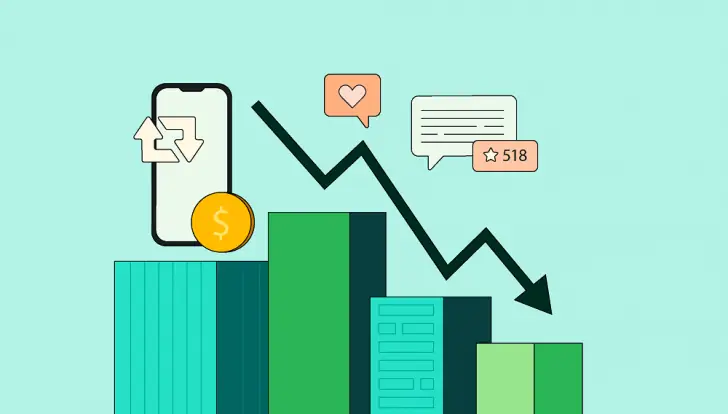
Ronnie Gomez/ Sprout | If inflation is the genie, then deflation is the ogre that must be fought decisively

Hindered Economic Growth

Another reason why deflation is bad for the economy is that it can hinder economic growth. When prices fall, businesses may delay investment in new equipment, technology, or research and development, hoping to wait for lower prices. This delay in investment can lead to decreased productivity and innovation, ultimately leading to slower economic growth.

Additionally, deflation can make it harder for governments to implement expansionary monetary policies, such as lowering interest rates or increasing the money supply, to stimulate economic growth.

Increased Real Interest Rates

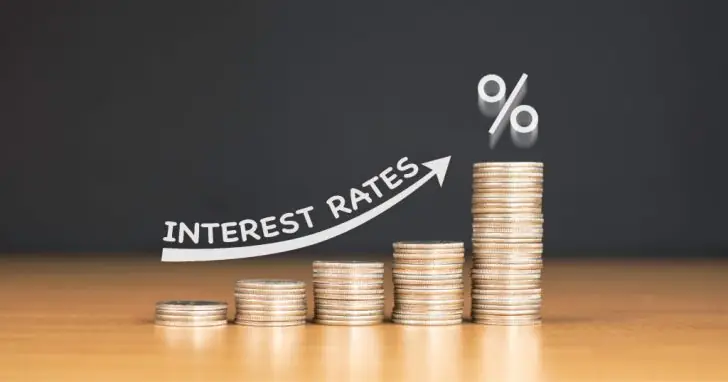
Deflation can also lead to an increase in real interest rates. Real interest rates are the nominal interest rates adjusted for inflation. When inflation is low or negative, as it is in the case of deflation, real interest rates can become higher than nominal interest rates.

This means that even if nominal interest rates are low, borrowers may face higher borrowing costs in real terms, leading to decreased investment and economic growth.
Ragan/ iStock | When there’s deflation, it means that although most markets are shrinking

Economic Uncertainty

It can also create uncertainty in the economy. When prices fall, businesses and consumers may become uncertain about the economy’s future direction. This uncertainty can lead to decreased confidence, further reducing consumer spending and business investment.

Additionally, deflation can create an expectation of further deflation, leading to a deflationary spiral, where consumers and businesses continue to delay purchases, ultimately leading to a recession.


You May Also Like

Why Nvidia Is Spending Nearly $13 Billion on Hugging Face Business

Why Nvidia Is Spending Nearly $13 Billion on Hugging Face

Nvidia is making a major move in the artificial intelligence software market. The chipmaker plans to acquire AI platform Hugging Face for about $12.93 billion, including $1 billion for an employee retention plan. The deal gives Nvidia a larger role in open-source AI, while Hugging Face is expected to remain an open platform. Hugging Face […]

Ami Ciccone September 19, 2026
Read More →
Robinhood Launches $200M Fund for Y Combinator Startups Business

Robinhood Launches $200M Fund for Y Combinator Startups

Robinhood is preparing to give retail investors access to a fund focused on startups linked to Y Combinator, one of Silicon Valley’s best-known startup accelerators. The new product, Robinhood Venture Fund II (RVII), is expected to begin trading publicly on August 13 at $25 per share. However, investors will buy shares in the fund, not […]

Ami Ciccone August 22, 2026
Read More →
Why AI Investment Alone Doesn’t Guarantee Business Growth Business

Why AI Investment Alone Doesn’t Guarantee Business Growth

Artificial intelligence has become a top investment priority across industries. Organizations continue to adopt larger language models, AI assistants, automated workflows, and intelligent agents with the expectation of improving efficiency and increasing revenue. Yet one question has become impossible to ignore: Why are many companies investing heavily in AI without seeing a meaningful return? The […]

Ami Ciccone July 26, 2026
Read More →
Understanding Engel’s Law and Its Impact on Consumer Spending Business

Understanding Engel’s Law and Its Impact on Consumer Spending

Economic behavior often reveals more about living standards than income figures alone. One of the most enduring concepts in economics is Engel’s Law, a principle that explains how spending habits change as income grows. First introduced in 1857 by German statistician Ernst Engel, the theory remains relevant for understanding household finances, poverty levels, consumer behavior, […]

Ami Ciccone June 27, 2026
Read More →
Nvidia Stock Surges as Jensen Huang Addresses China-US Relations Business

Nvidia Stock Surges as Jensen Huang Addresses China-US Relations

Nvidia stock (NASDAQ: NVDA) continues to attract investor attention after the company reached another record high this week. The chipmaker remains one of the strongest names tied to the artificial intelligence boom, with demand for AI infrastructure driving sharp growth across global markets. Still, Nvidia CEO Jensen Huang’s latest comments from Beijing added a different […]

Ami Ciccone May 31, 2026
Read More →
Reed Hastings, Netflix Co-Founder, Is Leaving the Company Business

Reed Hastings, Netflix Co-Founder, Is Leaving the Company

Netflix confirmed in its first-quarter earnings report that Hastings will not seek reelection to the board and will officially part ways with the company in June. After stepping down as CEO in 2023, the billionaire executive is shifting attention toward philanthropy and personal projects. His charitable efforts already carry significant weight. Hastings has donated $1.1 […]

Ami Ciccone May 1, 2026
Read More →