
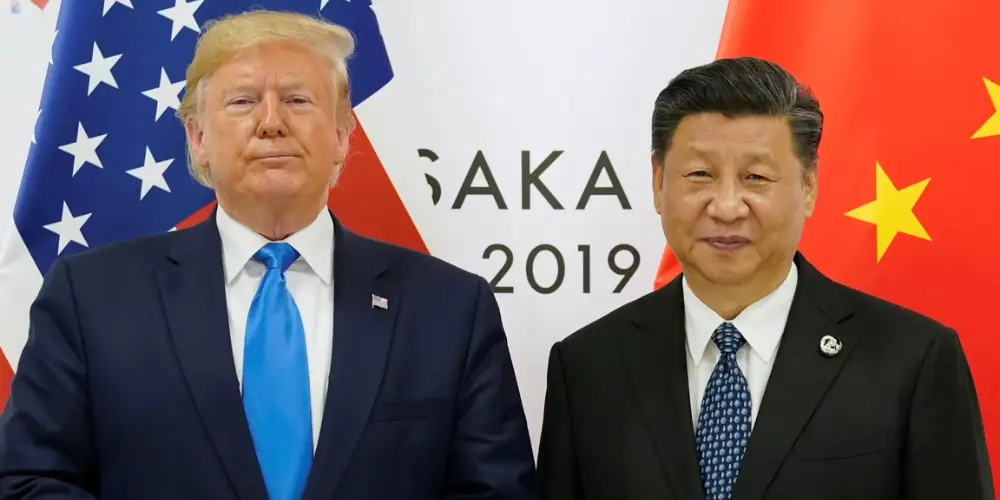
On April 10, China will implement a sweeping 34% tariff on all goods imported from the United States. This is a direct response to the U.S. government’s latest action—an identical 34% tariff slapped on Chinese products just days earlier. With both countries now escalating measures, the long-standing trade battle between the world’s two biggest economies has entered a far more volatile phase.
This development isn’t just about numbers. It marks a deeper shift in economic strategies, policy reactions, and business forecasts for 2025. It also reflects growing tensions that could impact everyday products, international markets, and global growth outlooks.
China’s Firm Retaliation
This isn’t China’s first move in response to American tariffs, but it’s by far the most comprehensive. Unlike earlier rounds that focused on specific sectors like agriculture or energy, this time China is going broader.
Key actions announced by Beijing include:
– A flat 34% tariff on all U.S. imports.
– Adding 11 American companies—including drone makers—to its “unreliable entity list.”
– Export restrictions on 16 U.S. firms that deal in dual-use technologies.
– A formal investigation into U.S.-made CT X-ray tubes.
– New export controls on seven rare earth minerals such as samarium, gadolinium, and terbium.
Beijing made the announcement during the Tomb Sweeping Festival—a major public holiday in China—signaling the symbolic weight of the move. According to the State Council Tariff Commission, “The United States has seriously disrupted fair trade practices. This action clearly damages China’s rights and is a form of economic coercion.”
U.S. Tariff Pressure
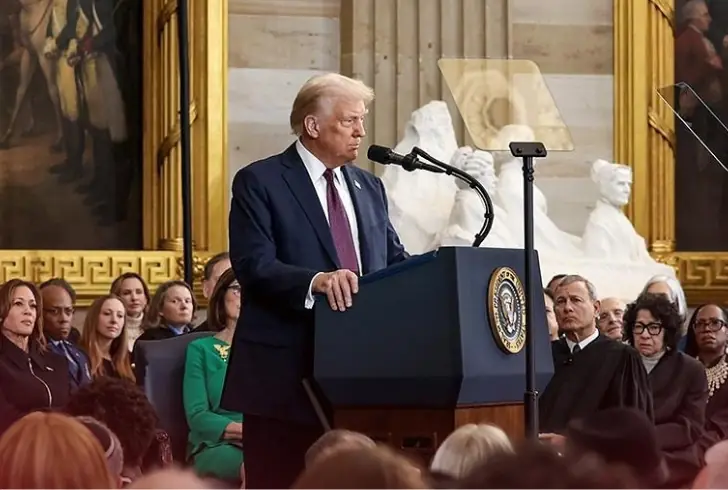
Just days before, the U.S. had ramped up its trade pressure, rolling out a 34% tariff across the board on Chinese imports. Officials cited national concerns, particularly around the flow of illegal fentanyl and broader imbalances in trade.
This marked the third round of new tariffs under the current U.S. administration, which had already added two previous batches of 10% each. With older tariffs still in place, the total duty on Chinese goods entering the U.S. now exceeds 54%.
The latest tariff hike came as a surprise to analysts, many of whom were expecting a more targeted or moderate increase. Instead, it’s a full-scale imposition that threatens to pull apart years of economic ties and roughly $500 billion worth of annual trade.
Global Markets React with Sharp Declines
Financial markets around the world didn’t take the news lightly. Wall Street saw steep losses:
– The Dow Jones Industrial Average fell more than 1,000 points, a drop of 2.7%.
– The S&P 500 declined by over 3%.
– The Nasdaq Composite, heavily weighted with tech stocks, slid 3.5%.
European and UK markets mirrored these losses, posting their worst performances in several years. A day earlier, U.S. indices had already begun tumbling, with the Dow dropping 1,600 points and the Nasdaq falling nearly 6%.
Speaking on the situation, U.S. Secretary of State Marco Rubio acknowledged the turmoil. “Yes, markets are taking a hit,” he said. “But businesses adapt once they know what the rules are.”
Still, the uncertainty surrounding those “rules” is precisely what’s fueling the panic. Global investors worry that the escalation could tip both economies into a slowdown—or worse, a recession.
Political and Economic Stakes on Both Sides
China’s approach signals a notable shift from its earlier strategies, which often involved selective and moderate retaliation. This time, the scope is much wider. Craig Singleton, an analyst with the Foundation for Defense of Democracies, observed that China isn’t just reacting—it’s matching U.S. moves line for line.
“China’s not chipping away at the margins anymore,” Singleton noted. “This is calculated and reflects Beijing’s readiness to challenge the U.S. directly.”
The focus of China’s countermeasures also appears highly strategic. By targeting sectors like agriculture, industrial goods, and dual-use exports, Beijing is hitting industries that hold political weight in the U.S.
At the same time, Chinese officials are trying to maintain domestic economic stability. Despite the trade war, they are keeping wider market channels open and are actively seeking ways to stimulate local demand.
Economic Impact Could Be Deeper Than Expected
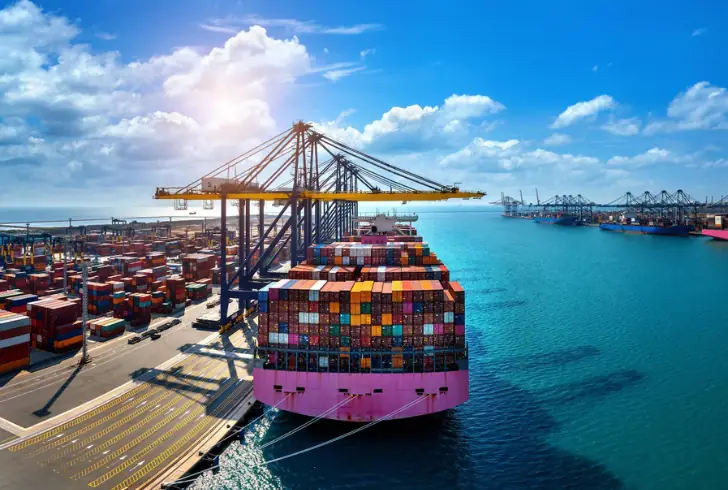
For global companies—especially those relying on Chinese manufacturing—this escalation brings real challenges. Supply chains that run through China now face dual tariff barriers from both ends. Businesses are scrambling to adjust sourcing, pricing, and delivery schedules.
For China, the timing isn’t ideal. The economy has been slowing, and officials are trying to boost consumer spending. Analysts warn that the latest developments could knock up to 2.5 percentage points off China’s 2025 GDP growth target of 5%.
Larry Hu, an economist at Macquarie Group, put it clearly: “With the U.S. tariffs now averaging around 69% on Chinese goods, the trade impact will be felt across multiple areas—falling U.S. demand, the redirection of exports, and ripple effects in related industries.”
That redirection—sometimes referred to as “export re-routing”—was a tactic used during earlier tariff rounds. Back then, Chinese goods were increasingly sent through Southeast Asia or Latin America to avoid direct levies. This strategy may resurface, though it’s harder to implement at such a large scale.
What Comes Next?
With both countries digging in deeper, the likelihood of a quick resolution appears slim. Negotiations remain open, but there’s no clear roadmap. Businesses, investors, and policymakers are watching closely, knowing that one misstep could turn a trade dispute into a prolonged economic standoff.
For now, the message from both Beijing and Washington is clear: neither side is backing down. And as China moves forward with this latest round of tariffs, the ripple effects are being felt far beyond factory floors and shipping ports—reaching stock markets, boardrooms, and household budgets across the globe.