WSJ Survey on Forecasters
The Wall Street Journal carried out a study on 63 financial, academic and business economists between the 6th and 10th of July. Majority of the economists expressed a common belief that the U.S. unemployment rate would descend even lower over the coming year to reach an unprecedented low rate in over 50 years.
An average number of the economic forecasters in the private sector noted that the unemployment rate which was at a low of 4% in June after plunging as low as 3.8% in May would even fall lower to 3.7% by the end of this year and further plunge to 3.6% by the middle of next year.
According to Gus Faucher, a chief economist at PNC Financial Services Group, the propelling forces in the labor market at the moment are rooting for a lower jobless rate. He added that there would be an increased demand for labor because of the rise in federal spending and the tax cut which would influence more businesses to hire more workers.
Historical Trend on Unemployment Rate
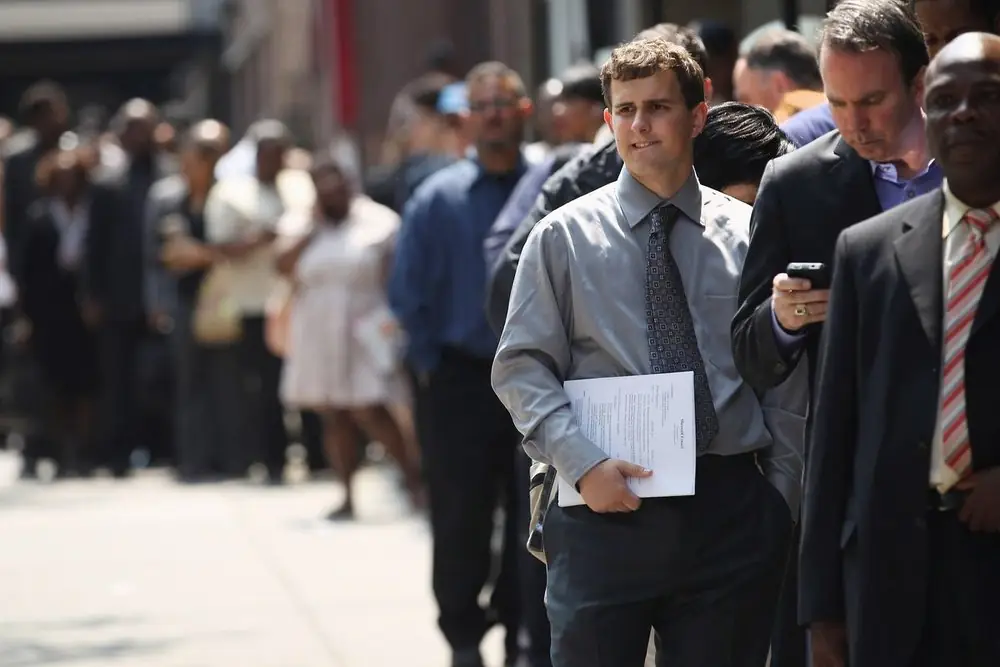
The unemployment rate of 3.8% recorded in May was the lowest record since April 2010 when a similar rate was recorded. Sources claimed that the rate of unemployment has only been occasionally lower than that ever since December 1969 when it was at 3.5%. Reportedly, since the labor department began its monthly records in 1948, the lowest unemployment rate was 2.5% that was recorded in May and June 1953 towards the end of the Korean War. As at 1944 during the peak of the World War II, the yearly unemployment rate was 1.2%.
Several economists have opined that the rate of unemployment cannot be below the natural rate of employment, without leading to an overheated economy and inflation among other financial distortions. For instance, Mr. Faucher noted that the economy isn’t programmed to remain functional at a stable 3.5% unemployment rate.

However, economists’ estimates of the least sustainable employment rate are not uniform. For instance, the survey in July had economists claiming on an average that it is at 4%. In June, the policymakers at the Federal Reserve stated that on a long-term, it was within the range of 4.1%-4.7% and an average rate of 4.5%.
Thus, the natural rate of employment is generally believed to vary from time to time, and the variations are largely attributed to structural economic forces such as the growth of productivity and an overheated economy.
Effects of Unemployment Rate
Fed Chairman, Jerome Powell, in a speech last month stated that although continuously strong economic conditions could likely cause inflation and financial instability, it also could have beneficial effects such as an attractive labor market as well as additional benefits to productivity growth.
However, a majority of economists in the recent WSJ survey indicated that employers would encounter labor shortages if the jobless rate remained below the natural level in subsequent years. Only about 38% of the forecasters stated that the low unemployment rate would lead to a high level of inflation. Most of them also claimed that an increase in the demand for employees would increase workforce participation among those who were in their prime working years.
According to a chief economist at KPMG LLP, Constance Hunter, increased participation would likely occur with a hot labor market, and that would probably reduce the effects of inflation.
Although economists have stated that the low unemployment rate rarely remained uninterrupted by a recession, the economic growth that has been taking place since the middle of 2009 has remained unaffected. An average number of the forecasters surveyed gave predictions that the GDP would increase by 2.9% in the fourth quarter of this year.
However, concerns about an imminent downward turn of events are increasing. For instance, the average likelihood that the US would experience a recession was 18% in July which is the highest it has been since late 2016. About 68% of the economists also said that they could foresee a plunge in the growth rate, and several of them mentioned that the trade dispute was a potential threat to the economy. Diane Swonk of Grant Thorton LLP stated that the trade tariffs and increasing trade tensions are causing great concerns.